
Ganesh Chaturthi Puja: Significance, Puja Vidhi, Benefits and How to Prepare
Ganesh Chaturthi is one of the most loved Hindu festivals dedicated to Lord Ganesha. He is traditionally worshipped as the deity associated with wisdom, good beginnings and the removal of obstacles. For many families, Ganesh Puja is not only a festival ritual. It is also a peaceful moment to pray for clarity, progress and a positive beginning.
Whether you are celebrating Ganesh Chaturthi at home, starting a new business, entering a new phase of life or simply wishing to spend time in prayer, Ganesh Puja can become a meaningful part of your spiritual routine.
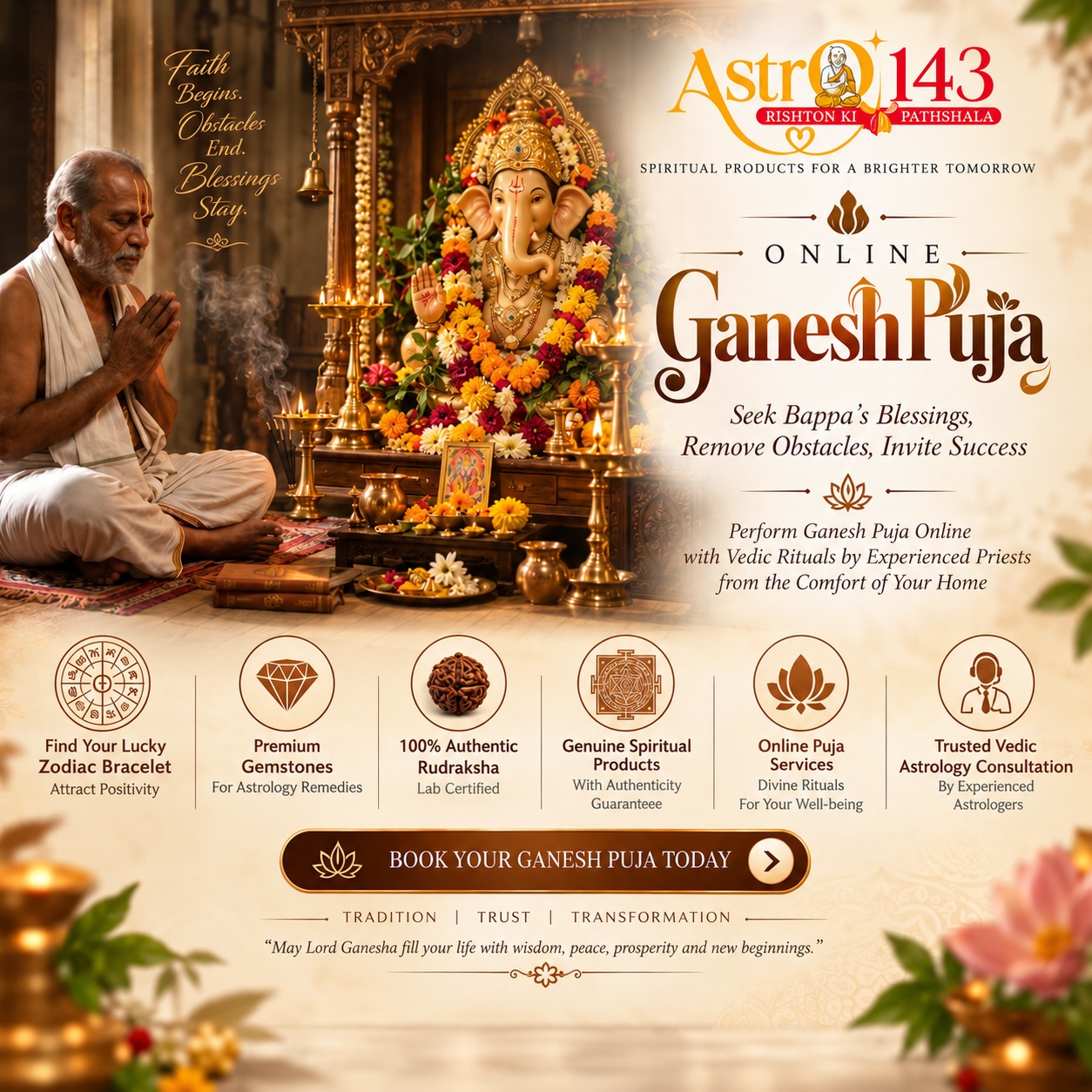
In this guide, we will understand the meaning of Ganesh Puja, the traditional Ganesh Chaturthi Puja Vidhi, common offerings, its traditional benefits and how you can arrange a Ganesh Puja online through Astro143.
What Is Ganesh Puja?
Ganesh Puja is a traditional form of worship dedicated to Lord Ganesha. In Hindu tradition, Lord Ganesha is respected as the remover of obstacles and as a symbol of wisdom, learning and auspicious beginnings.
People perform Ganesh Puja before important activities such as starting a business, moving into a new home, beginning education, starting a new project or entering an important stage of life.
The purpose of the Puja is not simply about asking for material success. For many devotees, it is also a way to create a peaceful state of mind and begin an important task with faith and positive intention.
If you are looking for a dedicated devotional service, you can explore the Ganesh Puja by Astro143.
Why Is Ganesh Puja Important During Ganesh Chaturthi?
Ganesh Chaturthi marks the traditional celebration of Lord Ganesha. During this festival, devotees bring an image or idol of Ganesha into their homes or community spaces and offer prayers, flowers, sweets and other traditional offerings.
Ganesh Chaturthi is observed during the Hindu month of Bhadrapada. The exact date changes every year according to the lunar calendar. In 2026, Ganesh Chaturthi was observed on September 14 in India. The festival can continue for several days depending on family and local traditions. Drik Panchang lists the local Puja timings and dates for different cities.
For devotees, the festival is a time to remember Lord Ganesha and seek blessings for wisdom, peaceful beginnings and progress.

Ganesh Chaturthi Puja Vidhi
The exact Puja Vidhi can vary according to family tradition, region and the form of worship being followed. A simple traditional Ganesh Puja generally includes the following steps.
1. Prepare the Puja Space
Begin by cleaning the area where the Puja will be performed. A clean space helps create a calm environment for prayer. Place a clean cloth and arrange the required Puja items near the worship area.
2. Ganesh Sthapana
Place the Ganesh idol or image respectfully in the prepared Puja space. Devotees may decorate the area with flowers, leaves and traditional decorations.
The placement and installation procedure may differ according to regional and family traditions, so devotees can follow their customary practice.
3. Sankalp
Sankalp is the moment when the devotee expresses the purpose of the Puja. You may silently state your intention and pray for wisdom, peace, clarity and the successful completion of your responsibilities.
4. Offer Traditional Items
Flowers, Durva grass, fruits, sweets and other traditional offerings are commonly offered to Lord Ganesha. Modak is especially associated with Ganesh worship and is a popular offering during Ganesh Chaturthi.
5. Chant a Ganesh Mantra
Devotees commonly chant the mantra “Om Gan Ganapataye Namah” during Ganesh Puja. You can chant it with a calm mind and sincere intention.
6. Aarti and Prasad
The Puja may conclude with Ganesh Aarti followed by the offering and distribution of Prasad. Families often spend a few quiet moments together after the Aarti and seek the blessings of Lord Ganesha.
What Is Offered During Ganesh Puja?
The exact list of offerings can vary depending on tradition. Common items include:
- Flowers
- Durva grass
- Modak and traditional sweets
- Fruits
- Incense
- Diya
- Chandan
- Rice
- Water
- Other items according to family tradition
The most important part of Puja is not simply the number of items used. Devotees traditionally focus on cleanliness, sincerity and devotion while performing the worship.