
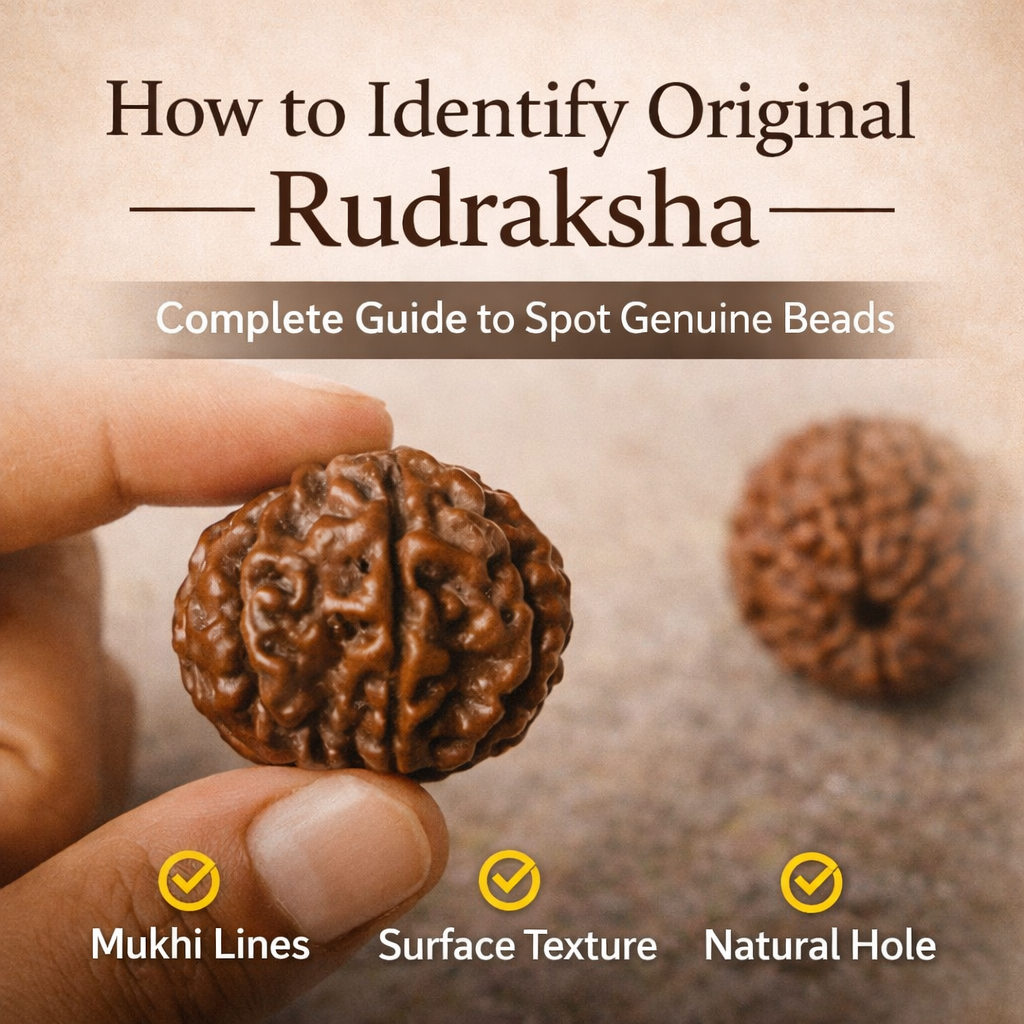
Rudraksha beads are sacred seeds widely used in meditation, spiritual practices, and Vedic astrology remedies. Because of their spiritual significance and growing demand, many fake or artificially modified Rudraksha beads are sold in the market.
Knowing how to identify original Rudraksha is essential to ensure you receive the true spiritual and energetic benefits of these sacred beads.
In this guide, we will explain simple methods to identify genuine Rudraksha beads and avoid fake ones.
What is Rudraksha?
Rudraksha is a natural seed from the Elaeocarpus Ganitrus tree, mainly found in Nepal, Indonesia, and parts of India. These beads are traditionally associated with Lord Shiva and are believed to carry powerful spiritual vibrations.
Each Rudraksha bead has natural lines called mukhis, which determine its spiritual significance and astrological benefits.
Why Authentic Rudraksha Matters
Original Rudraksha beads are believed to help with:
- Spiritual growth
- Mental peace and focus
- Protection from negative energy
- Balancing planetary influences in Vedic astrology
Fake or artificially carved beads do not carry the same spiritual value and are often sold purely for decoration.
How to Identify Original Rudraksha
1. Check the Natural Mukhi Lines
The mukhis (lines) on a Rudraksha bead run naturally from the top to the bottom.
Signs of genuine mukhis:
- Lines are continuous from one end to the other
- No artificial carving marks
- Natural grooves and texture
If the lines look perfectly carved or artificially deepened, the bead may be fake.
2. Observe the Surface Texture
Real Rudraksha beads have a natural rough texture with organic patterns.
Genuine beads usually have:
- Uneven surface patterns
- Natural holes and grooves
- Organic shape variations
Fake beads often look too smooth or perfectly shaped.
3. Check the Natural Hole
Most Rudraksha beads have a natural inner channel that allows them to be used in malas or bracelets.
In genuine beads:
- The hole follows the natural internal structure
- It may not be perfectly straight
Artificial beads often have machine-drilled holes that look too perfect.
4. Look at the Shape and Size
Natural Rudraksha beads come in different sizes and shapes.
Typical characteristics include:
- Slightly irregular shape
- Natural variations in color
- Unique patterns on every bead
If multiple beads look exactly identical, they may be synthetic or molded.
5. Buy from Trusted Sources
The safest way to ensure authenticity is to purchase Rudraksha beads from trusted sellers or reputable spiritual stores.
Reliable sellers usually provide:
- Proper bead identification
- Authentic sourcing information
- Transparency about bead origin
Common Myths About Rudraksha Testing
Some popular tests found online are not scientifically reliable, including:
Water Test
Many people believe that genuine Rudraksha sinks in water. However, both real and fake beads can sink or float, so this test is not reliable.
Copper Coin Test
The idea that Rudraksha rotates between copper coins due to energy is also not a dependable authenticity test.
Instead, the best way to identify genuine Rudraksha is through visual inspection and trusted sourcing.
Tips for Buying Genuine Rudraksha
When purchasing Rudraksha beads, remember these tips:
- Buy from trusted spiritual stores
- Check the natural mukhi lines
- Look for organic texture and natural patterns
- Avoid beads with artificial carvings
Authenticity plays a crucial role in receiving the true spiritual and energetic benefits of Rudraksha.
Conclusion
Rudraksha beads hold deep spiritual significance in meditation and Vedic astrology. Learning how to identify original Rudraksha helps ensure you receive genuine beads with authentic spiritual value.
By checking the mukhi lines, surface texture, natural hole, and overall appearance, you can confidently recognize genuine Rudraksha beads and avoid fake ones in the market.


.png)